

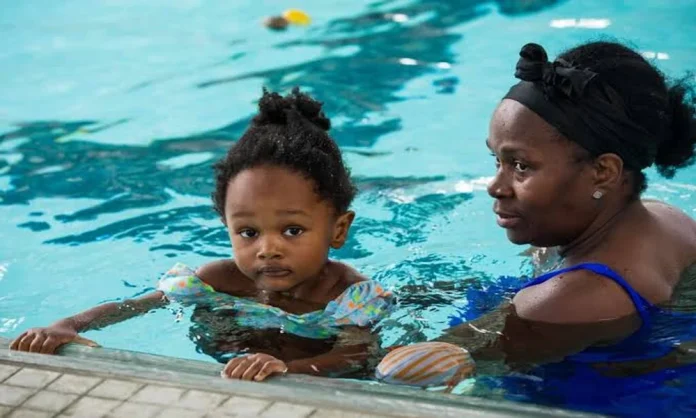


More than half of American adults – 54.7%, to be exact – have never taken a single swimming lesson. That number comes from a 2024 CDC Vital Signs report, and it should stop you cold if you’re a parent who’s been putting off swim enrollment “until next summer.” The right program doesn’t just teach a stroke. It builds a life skill that your kid carries for seventy years. The wrong one wastes your Saturday mornings and kills whatever enthusiasm your child had walking in the door.
So how do you actually sort a good program from a mediocre one? There are four things worth evaluating before you pay a registration fee: safety credentials, skill progression structure, scheduling fit, and the social environment your child will spend time in. Miss any one of them and you’ll be hunting for a replacement program six weeks later.
Why the Safety Baseline Is Non-Negotiable
Start here, full stop. Before you look at lesson times or monthly fees, confirm that any program you’re considering holds its instructors to a recognized lifeguard certification standard. The American Red Cross and YMCA both publish instructor certification requirements, and any reputable facility should be able to show you documentation on request. If the front desk hesitates, walk out.
The stakes are not abstract. Drowning is the cause of approximately 4,000 U.S. deaths each year and disproportionately affects some age, racial, and ethnic groups, according to a 2024 CDC Vital Signs report published in MMWR. Children who learn to swim in a properly supervised setting are the ones those numbers don’t reach. Beyond certification, check the instructor-to-swimmer ratio. For children under six, a 1:6 ratio is widely regarded as the outer limit of safe. Anything higher than 1:8 for any age group is a red flag, regardless of how clean the pool looks.
Barriers to swimming participation persist: a recent survey identified nearby swimming pool access, among other social and structural factors, as a major barrier to swimming skills training reported by Black and AI/AN persons, two groups already at elevated drowning risk. If your community lacks accessible, affordable aquatic programming, that’s a public health gap, not just an inconvenience.
The SWIM Framework: A Simple Way to Compare Programs
Here’s a framework I call SWIM – four criteria you can score on a napkin before committing to any program.
- S – Skill tiers. Does the program have clearly defined levels with measurable exit benchmarks? “Beginner, intermediate, advanced” is fine. “Yellow fish, red fish, blue fish” with no published skill list attached is not.
- W – Water time per session. In-water instruction time is not the same as total class time. A forty-five minute class with twenty minutes of changing room logistics and poolside talk delivers half the value it advertises. Ask directly.
- I – Instructor continuity. Rotating instructors every few sessions forces kids to re-establish trust and slows progress. Ask whether your child will have a consistent instructor for the full enrollment period.
- M – Member community. A program that mixes peer age groups well and runs a parent observation area creates accountability you can’t get from a private lesson. Watch a session before signing up.
Score each criterion 1 to 3. A program that clears 10 out of 12 is worth your time. Anything under 7 probably has a structural weakness you’ll feel in week three.
Age Matters More Than You Think
Programs love to advertise “all ages welcome,” but the developmental needs of a four-year-old and a twelve-year-old in the water are almost completely different. Here’s a quick breakdown of what to prioritize at each stage.
| Age Group | Primary Goal | What to Look For |
|---|---|---|
| 3 to 5 years | Water comfort and breath control | Parent-child classes, warm water, small groups |
| 6 to 9 years | Foundational stroke mechanics | Defined level progression, consistent instructor |
| 10 to 13 years | Stroke efficiency and endurance | Timed sets, option to join a youth team |
| 14 and up | Competitive or fitness focus | Lap swim access, coach-led training blocks |
If a facility puts your ten-year-old in the same class as a six-year-old with no differentiation, neither child is getting appropriate instruction. A program that tracks skill, not just age, will move faster and hold attention longer.
The Long Game: Why Enrollment Age Affects More Than Swimming
There’s a compelling body of research on what structured youth sports participation does well beyond the pool deck. Increasing the proportion of youth participating in sports from the most recent participation levels to the Healthy People 2030 target could reduce overweight/obesity prevalence by 3.37%, resulting in 1.71 million fewer cases of overweight/obesity, according to a 2024 study published in PMC by researchers at CUNY and Michigan State University. Swimming, as a structured aquatic sport, sits squarely inside that data. Getting your child enrolled in a well-run program isn’t just about teaching freestyle. It’s about building a physical activity habit early enough that it sticks.
“Sports participation is a significant predictor of young adults’ participation in sports and physical fitness activities.” – Aspen Institute’s Project Play research synthesis, drawing on longitudinal youth sport data
That’s the compounding argument for starting early and choosing well. A child who leaves a badly run program frustrated at age eight may avoid structured aquatic activity entirely through adolescence. A child who progresses through a clear, confidence-building curriculum keeps coming back.
The Saturday Morning Test (and What It Tells You)
Here’s a scenario worth running in your head before you commit. Picture a typical Saturday morning six weeks into a program. Your child slept badly. It’s raining. Getting to the pool means a twenty-minute drive. Do they want to go? That answer depends almost entirely on the social environment your program creates in those first few sessions, not the facility’s equipment.
Watch for three things during a trial observation: Do the instructors use the children’s names? Do they correct technique with encouragement rather than frustration? Do the kids look engaged in the last ten minutes of class, not just the first five? Those three signals predict retention better than any marketing brochure.
For families in the region, the Central Kentucky swimming facilities offered through the YMCA of Central Kentucky include group lessons, private instruction, and a dedicated youth swim team, which covers the full progression arc from water comfort through competitive development. That kind of continuity under one roof matters when you’re thinking about a multi-year enrollment, not just a summer session.
Cost, Scholarships, and What You Should Actually Pay
Private lessons run higher than group lessons in almost every market, and the gap is often not justified for beginners. A brand-new swimmer in a well-structured group class of six will progress faster than the same child in a one-on-one setting with a mediocre instructor, because peer learning in the water is real. Save private sessions for targeted skill correction once your child has foundational comfort.
Most nonprofit community programs, including YMCAs, offer financial assistance. Ask about it directly. There’s no income threshold that makes it rude to ask, and many programs are specifically funded to serve families at a range of income levels. A good program wants your child in the water.
The right community swimming program is out there. The ones worth your family’s time are transparent about their instructors’ credentials, structured around measurable skill progression, honest about in-water instructional time, and run by people who clearly enjoy teaching kids. Use the SWIM framework, watch a session before you sign, and pick the environment where your child will want to show up even on a rainy Saturday. That’s the one that actually teaches them to swim.