

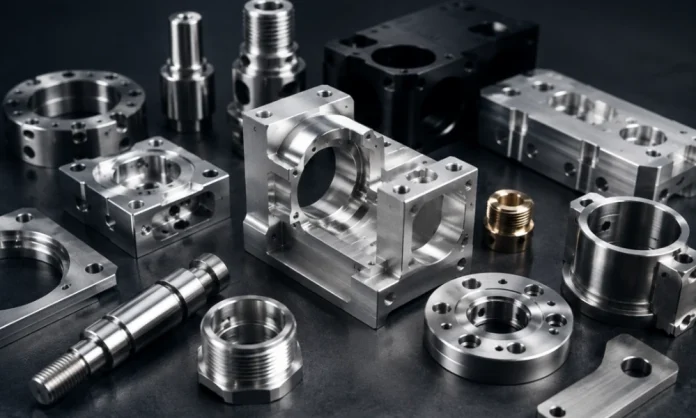


Precision metal fabrication sits at the intersection of material science, process engineering, and tight dimensional control, and the variation in capability between suppliers claiming to offer the same service is wider than most US procurement teams appreciate until a problem forces them to look more closely. Whether the requirement is for structural assemblies, precision enclosures, complex weldments, or machined components produced through a combination of fabrication processes, understanding what distinguishes a genuine precision metal fabrication supplier from one offering production volume without the process discipline that precision requires is essential to making sourcing decisions that hold up under engineering and quality scrutiny.
What Precision Actually Means in Metal Fabrication
Metal fabrication services described as precision are not all operating to the same dimensional standards. In laser cutting and waterjet profiling, precision typically means flatness, kerf consistency, and edge squareness within defined tolerances that determine whether cut parts can be assembled without secondary adjustment. In press brake forming, precision means consistent bend angles and flange lengths that remain within tolerance across a production run rather than drifting as tooling wears or as material springback varies between coils. In welding, precision involves distortion control, consistent joint penetration, and dimensional accuracy of the finished assembly relative to the design intent.
Suppliers offering precision metal fabrication should be able to provide documented tolerance capabilities for each process in their offering, verified by measurement data from recent production rather than by general claims. A metal fabrication company that can demonstrate Cpk data for its bending operations, weld procedure qualifications for its welding processes, and dimensional inspection records for recent complex assemblies is providing evidence of genuine precision capability that a facility tour and a capabilities brochure cannot substitute.
Industrial Metal Fabrication Services: Process Range and Integration
The breadth of processes a metal fabrication supplier offers in-house versus subcontracting affects both the cost and the quality consistency of the finished part. A supplier who laser cuts, forms, welds, and machines in-house maintains process continuity and accountability across every step of the part’s production journey. A supplier who subcontracts cutting or machining introduces handoffs where dimensional compliance must be reverified and where scheduling becomes dependent on a third party’s capacity and priorities.
Industrial metal fabrication services that include in-house finishing, including painting, powder coating, plating, or anodizing depending on the material, further reduce the logistical complexity and quality exposure that managing multiple vendors for a single part’s complete production involves. For US manufacturers sourcing complex fabricated assemblies, a supplier who offers the complete process range under one roof and one quality system provides meaningful supply chain simplification alongside the accountability that integrated production enables.
Custom Metal Parts Fabrication: Design for Manufacture Collaboration
The most cost-effective custom metal parts fabrication outcomes are produced when the supplier’s manufacturing engineers engage with the customer’s design team before the design is finalised, rather than receiving a completed drawing and simply producing what it specifies. Design for manufacture input from an experienced fabrication supplier can identify features that add significant cost without adding functional value, suggest alternative geometries that achieve the same design intent with simpler, more reliable production processes, and flag tolerance requirements that exceed what is achievable with the specified processes and materials.
Custom part manufacturing suppliers who offer this collaborative engineering engagement are providing a service that reduces total programme cost even when their per-piece prices are not the lowest in a competitive bid. The cost savings achievable through design optimisation before tooling and fixtures are produced typically dwarf the per-piece price differences between competing fabrication suppliers.
Evaluating a Metal Fabrication Company for Long-Term Supply
A metal fabrication company evaluated for long-term supply rather than a spot purchase requires assessment across several dimensions that a transactional procurement process does not typically examine. Financial stability, production capacity relative to the customer’s anticipated volumes, investment trajectory in equipment and technology, and the stability of the key personnel whose expertise underpins the company’s technical capability are all factors that determine whether a supplier who performs well on initial orders will continue to perform as volumes scale and the relationship deepens. Suppliers who have demonstrated consistent performance for demanding customers over extended periods provide the most reliable evidence of long-term supply suitability.