

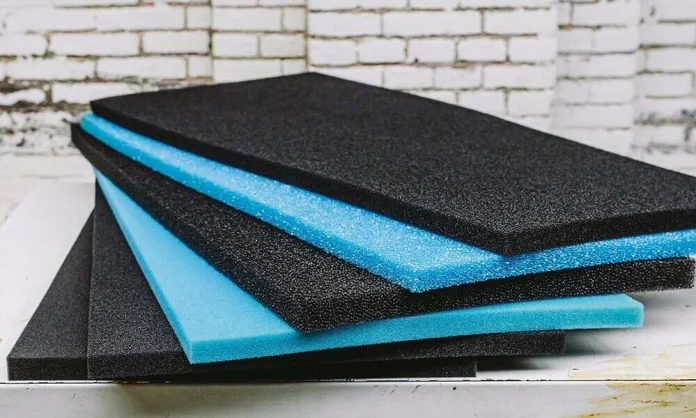


Setting up filtration for an aquarium involves dozens of small choices, and one that often gets underestimated is foam density. Most hobbyists walk into a store, grab whatever sponge is available, and hope for the best. But the density of the foam you place inside your filter directly determines whether your tank thrives or struggles. Getting it wrong means either water passes through too quickly without being cleaned, or the foam clogs so fast that you are constantly maintaining it. Understanding how density works puts you firmly in control of your aquarium’s health.
The term “density” in the context of aquatic filter foam refers to how tightly the porous cells within the foam are packed together. A high-density foam has smaller, tightly packed pores. A low-density foam has larger, more open pores. Both have their place; the trick is knowing when to use which.
What Happens Inside the Foam
Foam filtration works on two levels simultaneously. Mechanically, it traps solid waste particles or uneaten food, fish waste, plant debris as water flows through. Biologically, it hosts colonies of beneficial bacteria that convert toxic ammonia and nitrite into far less harmful nitrates.
For both functions to work well, the foam needs the right structure:
- Mechanical filtration improves with higher density because smaller pores catch finer particles
- Biological filtration benefits from surface area, which increases with a tighter pore structure
- Water flow must remain sufficient; overly dense foam restricts flow and starves the tank of circulation
This balance is why density selection is a genuine science, not guesswork.
Low-Density Foam: When Open Pores Work Best
Low-density foam, with its coarser, open-cell structure, is ideal as a pre-filter stage. Placed at the water intake, it captures the largest debris before it can reach finer filtration media downstream.
In heavily planted tanks or setups with large fish producing significant waste, low-density foam prevents rapid clogging and extends the maintenance intervals for the rest of the filter. It is also gentler on water flow, making it a good choice for tanks housing slow-moving species or fry that cannot tolerate strong currents.
High-Density Foam: Precision Filtration for Clarity
High-density foam works as a secondary or final-stage filtration layer. Its tightly packed structure captures fine particulates that coarser foam misses entirely, which is why tanks using it tend to have noticeably clearer water.
This is the preferred foam type for nano tanks, breeding setups, and aquariums keeping sensitive species that react poorly to even trace suspended particles. The aquarium sponge filter foam used in standalone sponge filters for breeding tanks is almost always a medium-to-high density variant fine enough to protect fry, but porous enough to support robust bacterial colonies.
Pairing Multiple Densities for Layered Filtration
The most effective filtration systems use a progression of densities rather than relying on a single foam type. Water enters through the coarsest foam first, then passes through progressively denser layers before being returned to the tank. This approach:
- Maximises the mechanical filtration efficiency at each stage
- Distributes bacterial colonies across multiple surfaces
- Reduces the frequency of full filter cleanings
- Prevents premature clogging of fine media that is harder to clean
Many serious aquarists in India who keep discus, shrimp, or rare cichlids design their canister filters with exactly this kind of layered foam arrangement. The same principle is applied in professional aquaculture setups where fish tank filter foam is arranged in graded sequences to handle large bioloads efficiently.
Tank Size, Bioload, and Choosing Accordingly
The size of your tank and the number of fish you keep directly influence which density makes practical sense.
For tanks under 100 litres with a moderate fish population, a single medium-density foam often handles both mechanical and biological filtration adequately. For tanks above 200 litres, or those stocked heavily with messy fish like goldfish or oscars, a two-stage or three-stage foam arrangement is almost always necessary.
Shrimp-only tanks present a special case. Shrimp are extremely sensitive to water quality fluctuations, and high-density foam offers the fine filtration and stable bacterial habitat they need. Conversely, the strong suction of certain filter intakes can harm shrimp, making foam-covered intakes with a softer, low-density outer layer an important safety measure.
Sourcing Quality Foam in India
Not all foam sold as aquarium foam is made to the same standard. Poor-quality foam degrades quickly, releases compounds into the water, and loses its structural integrity after a few washes, forcing frequent replacements.
When sourcing filtration media, looking for foam produced by a reputable industrial foam manufacturer with experience in aquatic applications matters more than most hobbyists realise. Food-safe, chemically inert open-cell polyether foam is what you need; the kind made under controlled conditions where pore consistency and material safety are tested rather than assumed.
In India, the availability of quality aquatic filtration foam has improved considerably, with manufacturers supplying both retail hobby stores and professional aquaculture operations using consistent production standards.
Crystal Clear Finishes: The Right Foam Makes All the Difference
Foam density is one of those foundational decisions that shapes everything downstream in your aquarium’s ecosystem. Match your foam to your tank’s specific needs; the species you keep, the bioload you manage, and the filtration system you run and your water quality will reflect that care. Whether you are running a simple community tank or a complex breeding setup, choosing the right aquarium sponge filter foam with the right density is the difference between a filter that barely copes and one that genuinely protects your aquatic world.
————————————————————————————————–